

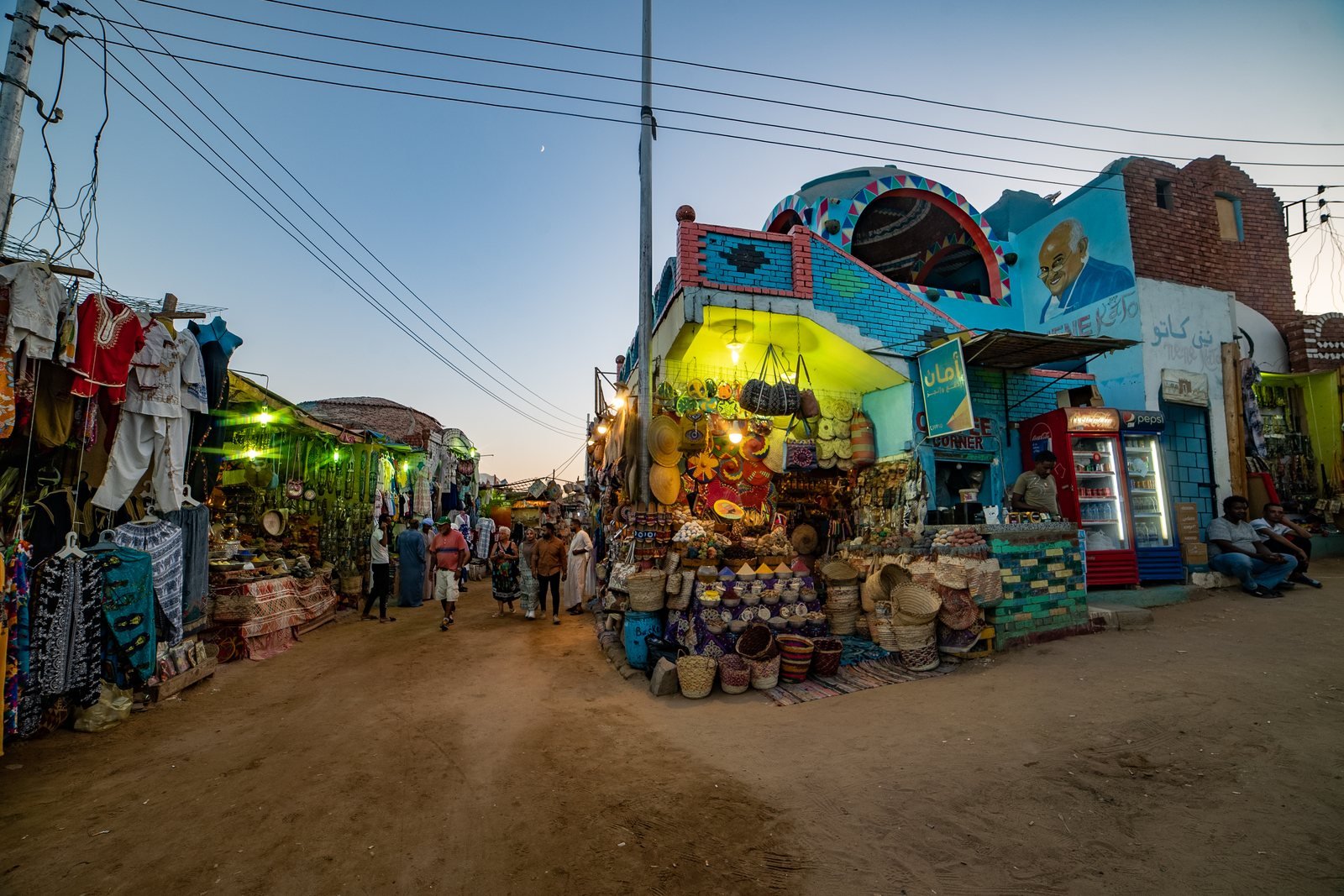
Every week a guest tells me, a little embarrassed, that they loved the temples and hated the walk from the boat to the temple. The sellers, the carriage drivers, the man with the scarab who will not take no. The hassle is real, it is the thing people remember with least pleasure, and it is the thing nobody warns you about. So here is the warning, with the places it happens, why it happens, how we deal with it on our cruises, and how to say no without feeling like a bad person.
- The hassle is concentrated in a few places: the landing stage and the carriage ride at Edfu, the bazaar between the dock and the temple at Kom Ombo, the souks in Luxor and Aswan, and the stalls at the Nubian village.
- Inside the temples and on the ship there is none. The sellers are at the gates, not past them.
- At Edfu you go up to the temple by car, with drivers we work with, and the ride is part of your cruise, so nobody bargains on the quay. A horse carriage only if you ask for one. Your guide walks with you through every bazaar.
- We make no shopping stops unless you ask for one. If a place is worth it, we say plainly what it is and you decide.
- Saying no works. Say it once, keep walking, and do not take anything that is put in your hand.
- If you want to buy, the souks are a pleasure. Agree the price before you touch, pay in Egyptian pounds, and expect to pay about half of the first number.
Why there is hassle at all
The sellers at the landing stages are not criminals and most of them are not cheats. They are men from the villages behind the temples, and a ship arriving with a hundred and twenty passengers is the only trade they see that day. Tourism went through hard years in Egypt and these families felt it most. That does not make the tenth scarab easier to refuse, but it explains why nobody gives up after the first no, and why a smile and a firm “la shukran” works better than anger.
The second reason is tipping. In Egypt a small tip is ordinary courtesy, and for most people who work around tourists it is part of what they live on, not a bonus. A carriage driver who asks for more at the end of the ride is not always trying it on; he may simply have been paid very little by whoever booked him. This is why we pay the drivers ourselves, and why the guideline amounts for the people who look after you on the cruise are on your itinerary, not negotiated at a quay.
Where it happens
Edfu is the one people talk about. The temple is a couple of kilometres from the river, and the traditional way up is a horse carriage from the landing stage. The quay is lined with carriages, the drivers call out, and if you arrive without an arrangement you bargain for the ride, then bargain again at the top, then find that the driver has waited for you and expects something for the wait. At the temple gate there is a bazaar you walk through twice.
Kom Ombo is gentler. The temple is right on the river, but the path from the ship passes a line of stalls, and the sellers know you have twenty minutes before the ship sails. Luxor Temple has a few sellers at the exit; Karnak has a row of shops you can avoid. Philae has a small bazaar at the motorboat landing. The Valley of the Kings has a covered market at the entrance that you can walk straight past.
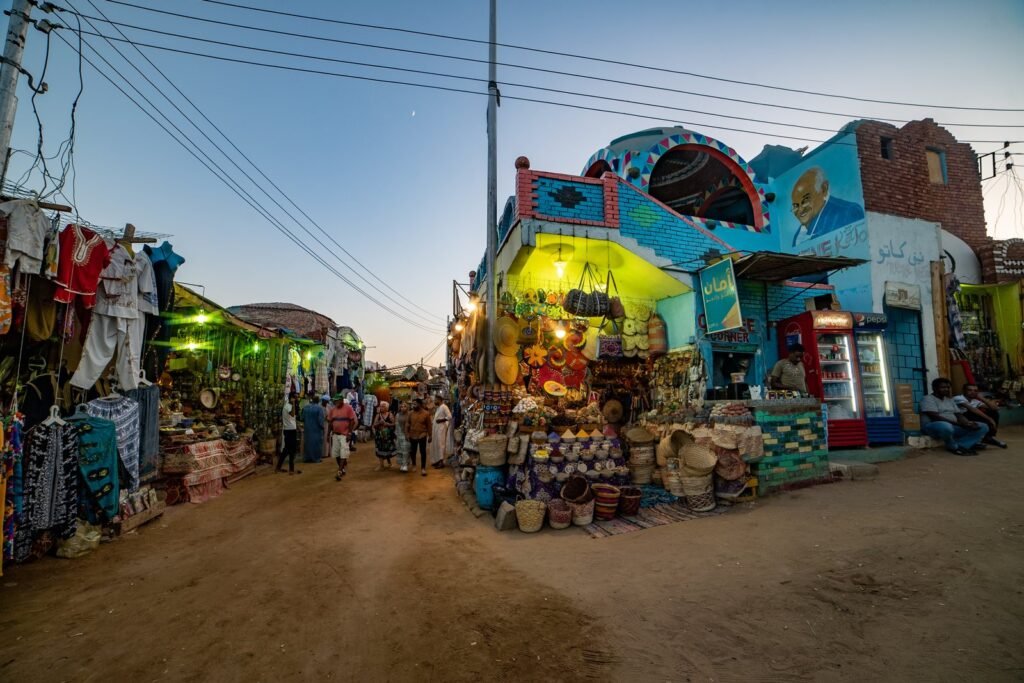
The souks in Luxor and Aswan are different. They are real markets for the town as well as for visitors, and the hassle there is the ordinary hassle of a market: everyone wants you to look. The Nubian village in Aswan, which is an optional afternoon by boat, has stalls on the way in and a tradition of showing children a crocodile for a tip.
Inside the temple walls there is nothing. Nobody sells past the ticket gate, the ship is private, and the sun deck is the quietest place on the river. The hassle is a strip twenty metres wide at each gate.
What we do about it
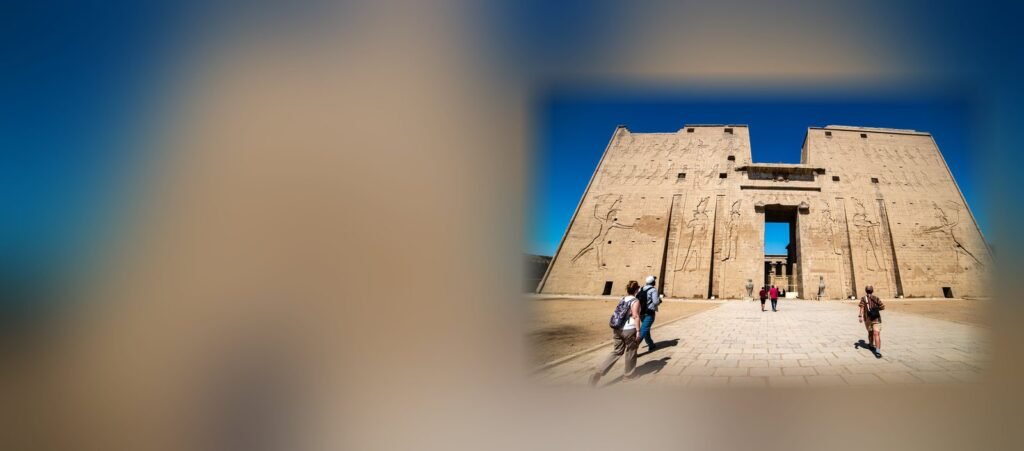
At Edfu the ride up to the temple is by car, with drivers we work with every week, and it is part of your cruise. You do not bargain on the quay, you do not pay at the top, and the driver who brings you up waits and brings you down. We stopped making the horse carriages our standard, for the horses’ sake. If you want a carriage anyway, tell us: we say what we know about the horses, and if you still want it we arrange it the same way, with the driver waiting.
Everywhere else, your guide walks with you. A guide who is known on the quay changes the conversation; the sellers know there is no sale to be made and most of them move on to the next ship. I walk through the Kom Ombo bazaar with my group in a line, I talk, and we are at the temple gate in three minutes.
We make no shopping stops unless you ask for one. Many tours include a visit to an alabaster workshop on the West Bank, a papyrus institute in Luxor or a perfume shop in Aswan, where the group is given tea and a demonstration and then the selling starts, and the guide earns a commission on what you buy. We never stop anywhere without asking first. If a place is worth seeing, your guide says so plainly: this is a shop, this is what it sells, nobody has to buy. If you want to go, we go. If you would rather skip it, we skip it and the time goes on the sites. After fifteen years on this river we also know which places to avoid, and we avoid them.
Tipping on the cruise is explained once, on your itinerary, with the guideline amounts for the guide, the driver and the crew. You will not be asked for money by the people who work with us. If anyone is, I want to know.
How to say no
Most of the discomfort comes from not knowing the rules, so here they are.
- Say “la shukran” (no thank you) once, with a smile, and keep walking. You do not owe anyone a conversation.
- Do not take anything that is put in your hand, not a scarab, not a scarf, not a “gift”. Once it is in your hand it is a sale.
- Do not stop to explain why not. Stopping is a yes.
- “Maybe later” means “yes, later” and the seller will remember your face. Say no.
- If someone walks beside you for a hundred metres, that is normal; he will turn back at the gate.
- Children asking for pens or money: a smile and a no. Giving keeps them out of school.
- Photos of camels, donkeys and men in galabeyas at the sites are a trade. If you take one, a small tip is expected. If you do not want to pay, do not take the photo.
None of this is rude. The sellers hear it a hundred times a day and nobody is offended by a cheerful no. What annoys them is a tourist who looks, asks the price, handles the goods and then walks off, because that was fifteen minutes of their day.
Carry small notes for the tips you choose to give. How baksheesh works is in money and tipping in Egypt, and how to dress in town and ask before a photo is in what to wear in Egypt.
If you want to buy
The markets are also one of the pleasures of Egypt, and it would be a pity to walk through all of them with your eyes on the ground. Here is how to buy well.
- Agree the price before you touch anything. Ask “how much” first, not after.
- The first price is an opening, not an insult. Offer a third, settle around half, and do it with good humour. A seller who agrees too fast was going to take less.
- Pay in Egyptian pounds and carry small notes. A seller cannot change a large note and will not try.
- Walking away is part of the game, and the price that follows you is the real one.
- Once you have agreed, pay it. Agreeing and then bargaining again is the one thing that is rude.
What is worth buying: cotton, which Egypt does well; spices and hibiscus from the Aswan souk; scarves; Nubian baskets and beadwork at the village; alabaster from the West Bank workshops, if you check it is stone and not resin, which you do by weight and by holding it to the light. Papyrus is the one to be careful with. Most of what is sold at the gates is banana leaf printed in a factory, and it cracks when you roll it. Real papyrus rolls, and is sold in shops, not on quays.
The hassle, place by place
| Place | What happens | On our cruises |
|---|---|---|
| Edfu landing stage | Carriage drivers bargain for the ride, then again at the top | A car with our drivers, part of the cruise, and the driver waits. A carriage only if you ask |
| Edfu temple gate | A bazaar you walk through twice | Guide walks with the group; three minutes each way |
| Kom Ombo path | Stalls between the ship and the temple | Same |
| Valley of the Kings | Covered market at the entrance | Walk past it; the tombs are beyond |
| Luxor and Aswan souks | A real market; everyone wants you to look | Free time, with directions from the guide |
| Nubian village | Stalls on the way in, crocodile photos for a tip | Optional afternoon; the guide tells you what is fair |
| Shopping stops | Alabaster, papyrus and perfume demonstrations with commission | Only if you ask, and we say what it is first |
| Inside the temples, on the ship | Nothing | Nothing |
A word on the horses
Guests ask about the Edfu horses, and they are right to. The carriages are a tradition, but it is a hard living and not every horse on that quay is well, and we did not want to be part of it. So on our cruises the ride up to Edfu is by car unless you ask for a carriage. Some guests still want one, even after we have explained the situation, and that is their choice. If you do, we pick a driver whose horse is rested, we ask you not to let him race, and we ask you not to pay extra for speed. A tip for a calm ride is the one that helps the horse.
How we handle tipping, drivers and payment is in how to book a Nile cruise, and if you are wondering whether an operator is real before you pay them anything, read how to check a Nile cruise company.
If the hassle is what worries you most, the wider picture is in is a Nile cruise safe.
Questions
Is the hassle in Egypt as bad as people say?
At the gates of the temples and the landing stages, yes, it is persistent. Inside the sites, on the ship and in the hotels there is none. With a guide beside you it is a few minutes a day.
Is the ride to Edfu temple by horse carriage?
Not unless you ask for one. We go by car, with the driver waiting to bring you back, and the ride is part of the cruise. If you would like a carriage, we arrange it the same way, and we tell you about the horses first.
Are there shopping stops on your cruises?
Not unless you ask for one. If a stop is worth making, the guide says what it is first and you decide. If you want to shop on your own, we tell you where to go in your free time.
How much should I tip?
The guideline amounts for the guide, the driver and the ship’s crew are on your itinerary, and I answer the question in person for anyone who asks. We do not publish figures because they are different for every trip.
Is it safe to walk through the souk on my own?
Yes. Luxor and Aswan are safe towns and the souks are busy and lit at night. The only risk is to your wallet, through enthusiasm rather than theft.
What should I not buy?
Papyrus from the quays, which is usually banana leaf, and anything described as an antique, which is either fake or illegal to export.
