


Egypt is hot, and the people who ask us about it are right to ask. The Valley of the Kings at one in the afternoon in July is not a place to be. The answer is not to avoid Egypt, it is the shape of the day: we leave the ship at half past six, the temples are done before the heat, and by one o’clock the ship is sailing and you are by the pool. This is how the day works, which sites get hot and when, what changes between winter and summer, and what to bring.
- Every visit starts early. We leave the ship at about 6:30 and are back for lunch before the heat of the day.
- The ship sails in the afternoon, when the deck has a breeze and the pool is open. Nobody is at a temple at two o’clock.
- From October to April the days are warm and the mornings cool, with highs of about 23 to 35°C. From May to September it is 39 to 42°C by noon, and the sightseeing is finished by ten.
- The hot sites are the ones with no shade and no water: the Valley of the Kings, Hatshepsut and Abu Simbel. We do them first.
- A hat, water, light long sleeves and sandals you can walk in. The packing list is below.
- Winter nights are cold for Egypt, down to about 8°C. Bring a jacket for the sun deck after dark.
The day is built around the sun
On every cruise we run, the day has the same shape. Wake-up call before six. Breakfast. Off the ship at about 6:30 with the guide, in a bus or on foot, while the air is still cool. One or two visits, done by eleven or twelve. Back on board for lunch. The ship sails at about one, and the afternoon is yours: the sun deck, the pool, the river going past. Dinner is at 7:30 in winter and 8 in summer, and the evening is on board or in town, after dark, when the heat has gone.
People sometimes ask whether they can sleep in and see the temple later. On a group cruise, no, and we would not advise it on a private one either. The early start is not a quirk of the programme, it is the whole point of it. The guides who have been doing this longest are the ones who leave earliest.
The sites that get hot, and the ones that do not
Not every site is the same in the heat, and the order we visit them is not an accident.
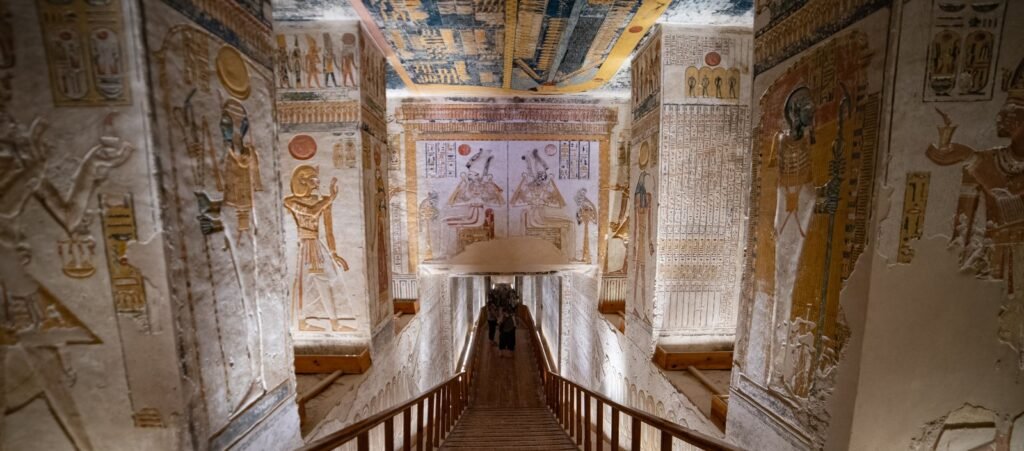
The Valley of the Kings is the hottest place on the itinerary. It is a dry valley of pale rock that reflects the sun, there is no shade between the tombs, and inside the tombs the air is warm and still, especially when a group is in the corridor with you. We go there first on the West Bank morning, and three tombs are enough.
Hatshepsut’s temple is open terraces against a cliff that faces east, so it is in full sun from sunrise. It is the second stop of the same morning, before ten. The Colossi of Memnon are a ten-minute stop in the open and nobody suffers.
Karnak is enormous, but the great hall is a forest of columns and the columns give shade. Luxor Temple we visit in the late afternoon, as the lights come on, and it is pleasant. Edfu and Kom Ombo are both on the water and both have shaded halls; on the four-night cruise Edfu is a morning visit and Kom Ombo an afternoon one, towards sunset. Philae is an island, reached by motorboat, and there is always a breeze on the water.
Abu Simbel is the exception to everything. It is an extra, not part of the cruise, it is three hours south of Aswan in open desert, and in summer it reaches 45°C. If you add it, you leave Aswan at four in the morning, see the temples at dawn and are back by lunch. Read how Abu Simbel works from a Nile cruise.
What the heat is like, month by month
These are typical daytime highs and night-time lows in Luxor. Aswan runs a degree or two warmer. They are averages, so expect days on either side of them.
| Month | Day | Night | What it means for the cruise |
|---|---|---|---|
| October | about 35°C | about 17°C | Warm mornings, hot by noon, lovely evenings |
| November | about 29°C | about 12°C | The best month on the river |
| December to February | about 22 to 25°C | about 6 to 8°C | Warm days, cold mornings and nights; our busiest weeks |
| March | about 30°C | about 11°C | Like November, with the odd windy day |
| April | about 35°C | about 16°C | Hot by noon; the early start matters |
| May and September | about 39°C | about 20°C | Sightseeing done by ten; afternoons in the pool |
| June to August | about 41°C | about 24°C | Very hot, very quiet, the lowest prices of the year |
If you are choosing your dates, the best time for a Nile cruise goes through the months in more detail, and Christmas and New Year on the Nile covers the holiday weeks, which are our busiest and sell out first.
Winter is the other half of the answer
From December to February the question is not the heat but the cold. The days are warm, about 22°C, and the sun deck at noon is perfect. But the ship leaves for the temples at 6:30, and at that hour it is 8°C and sometimes less, with a breeze off the water. On the sun deck after dinner it is cold enough for a jacket.
Bring a warm layer for the mornings and take it off by nine. The cabins are air conditioned for cooling, and not every ship has heating. A few nights a year are cold enough to want it, and no ship fits a heating system for a few nights. Dress warmly for the early start and the evening deck, and the day takes care of itself. The pool is open, and whether anyone swims in January depends on where they are from.
Summer, honestly
From June to August it is 40°C and more by midday, every day. We still run cruises, the ships still sail, and the people who come in summer come back. Here is what changes.
The visits are shorter and earlier. We are off the ship at six, sometimes half past five, and back by ten, eleven at the latest. The afternoons are on board, in the pool or in the air conditioning, and the ship sails in the heat of the day with a wind over the deck. The evenings are warm and the towns are alive after dark. Abu Simbel in summer means a four o’clock start, and it is worth it.
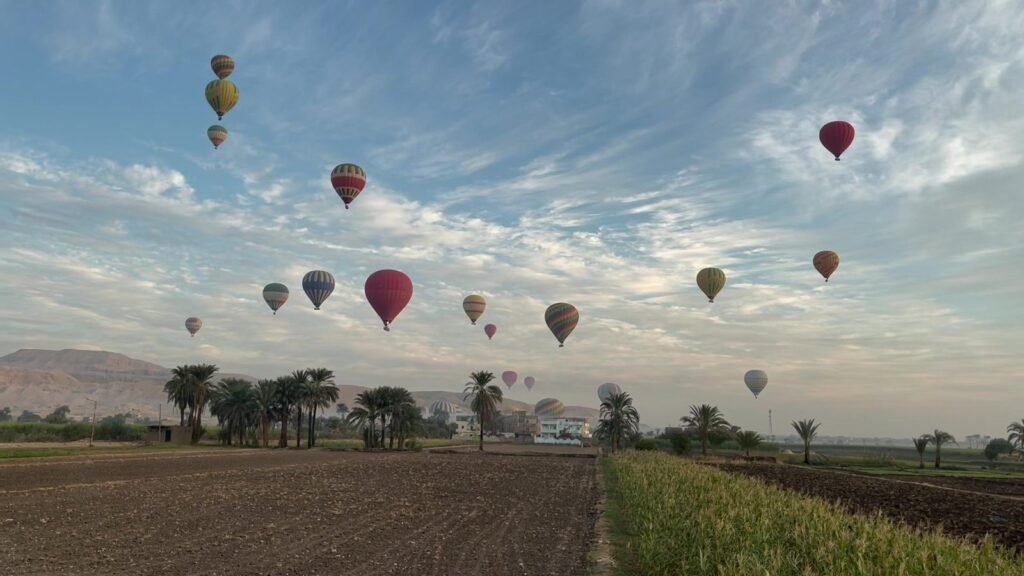
The reward is the river to yourself. The temples are empty, the ships are half full, the cabins cost less than at any other time, and the light in the early morning is the best of the year. If you cope with heat and you want the Nile without the crowds, summer is not a compromise.
What to bring
- A hat with a brim. A cap is not enough at the Valley of the Kings.
- Sunglasses. The rock and the sand reflect.
- Light long sleeves and long trousers in a loose cotton or linen. They are cooler than bare skin in the sun, and they are right for the mosques and the villages.
- Sandals or light shoes you can walk in for three hours on stone and sand.
- Sunscreen, applied before you leave the ship, not at the temple.
- A bottle of water in your bag every time you leave the ship, and another one.
- For winter, a jacket and something warm for the 6:30 start.
The full list, including what to wear in the tombs and on the sun deck, is in what to pack for a Nile cruise.
Who should think twice
The early start and the air conditioning make the cruise easy for most people, including grandparents and small children. The ship waits at every site, and anyone who has had enough can sit in the shade or go back to the bus. But if you have a condition that heat makes worse, July and August are not the months, and we will say so when you ask. October, November and March to April give you warm days without the extremes. For families, read how we plan a Nile cruise with children.
Eating and drinking around the heat, from the buffets to the bottled water, is in food and drink on a Nile cruise.
Questions
Is a Nile cruise too hot in summer?
Midday is too hot for anyone, which is why nobody is at a temple at midday. With the visits done by ten and the afternoons on board, people who are comfortable in heat enjoy summer on the river. People who are not should come from October to April.
What time do the visits start?
About 6:30 from autumn to spring. In summer six, and sometimes 5:30, so that we are back on board by ten. Breakfast is before that.
Is the ship air conditioned?
Yes, every cabin and every public room on the ships we use. The sun deck is open air with shaded areas and the pool.
Which site is the hottest?
The Valley of the Kings, followed by Hatshepsut and, if you add it, Abu Simbel. All three are visited first thing in the morning.
Is it cold on the Nile in winter?
Early mornings and evenings are, with temperatures down to about 8°C in December and January. The days are warm. Bring a jacket.
Do we walk far in the heat?
At Karnak and the Valley of the Kings, about two hours on your feet with stops in the shade. Everywhere else the bus or the boat brings you to the gate.
