


Guests often ask me before they come what to wear in Egypt, whether they can go into a mosque, and what changes in Ramadan. The good news is that Egypt is used to visitors and nobody expects you to know every custom. A few simple habits, though, make the days easier and the welcome warmer. Here is what to wear at the temples and in the towns, how to visit a mosque or a church, how to take photos of people, and what Ramadan means for your trip.
- At the temples and on the ship, wear what is comfortable. In the towns, cover shoulders and knees.
- In a mosque or a church: shoulders and knees covered, shoes off in mosques, and women cover their hair in mosques.
- Ask before you photograph a person. Some will want a small tip.
- Use your right hand to give and take, and a simple “salam alaykum” goes a long way.
- Ramadan 2027 is expected from about 8 February to 8 March. The sites stay open; on the ship nothing changes.
What to wear
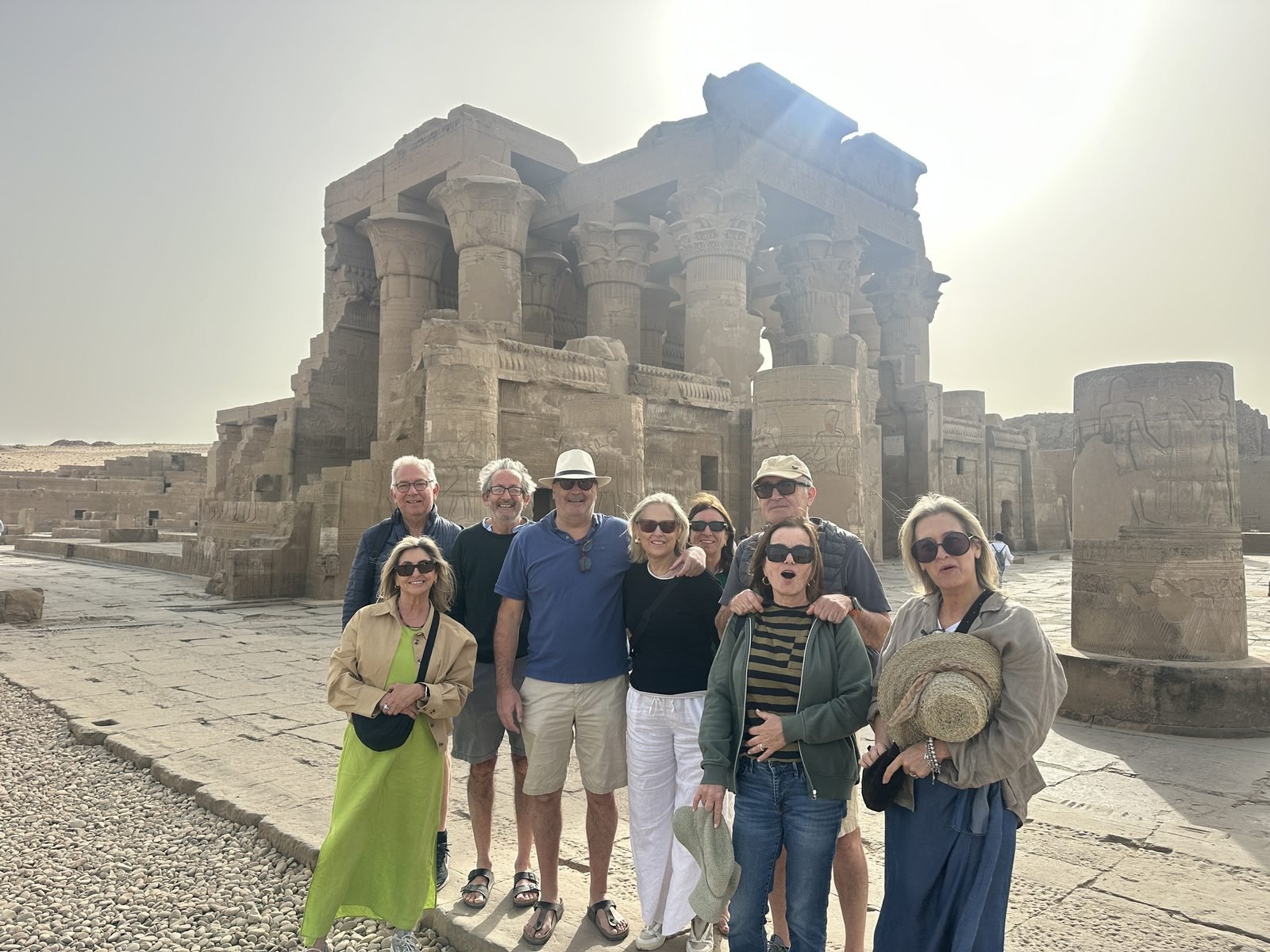
There is no dress code at the ancient sites. Most of what you wear there is decided by the sun, not by custom: a hat, light long sleeves and trousers in cotton or linen are cooler than bare skin and protect you better. On the ship, at the pool and on the sun deck, wear what you would wear at any resort.
In the towns it is different. Luxor and Aswan are conservative places, and in the streets, the souks and the villages most Egyptians cover their shoulders and knees. You will not be turned away for shorts, but you will be stared at less, and treated more like a guest, if you dress the way people around you do. For women, a loose top that covers the shoulders and a skirt or trousers below the knee are perfect; a light scarf in your bag is useful for mosques and for the sun. Our packing list has the rest. Men in shorts are less of an issue, but long trousers are better for a mosque or a church.
Visiting a mosque or a church
Mosques in Egypt are open to visitors outside prayer times, and most Egyptians are pleased when guests show interest. The rules are simple: shoulders and knees covered, shoes off at the door, and women cover their hair. At the bigger mosques that see many visitors, a scarf or a robe is often lent at the entrance. Avoid prayer times, and above all the midday prayer on Friday, which is the main prayer of the week. Walk around people who are praying, not in front of them, and keep your voice low. In Luxor you will see a mosque on your first day without looking for one: the mosque of Abu el-Haggag stands on top of the ruins inside Luxor Temple.
Coptic churches welcome visitors too. Cover shoulders and knees, keep quiet during a service, and ask before photographing inside. If you are in Egypt over the holidays, Christmas in Egypt explains why the Copts celebrate on 7 January.
Photos of people
Egyptians are warm and many are happy to be photographed, but ask first, with a gesture of the camera and a smile. Some will say no, especially women, and that should be respected. Men in galabeyas posing with camels or donkeys at the sites are working, and expect a tip if you take their picture; if you do not want to pay, do not take the photo. Keep small notes for this (see money and tipping in Egypt). Children will often ask to be photographed and then ask for money. Avoid photographing police, soldiers, checkpoints and government buildings. Drones need prior permission from the Ministry of Defence, and bringing one in without it can lead to a heavy fine or prison, so leave yours at home. The UK government’s travel advice for Egypt sets out the rules on drones and photography.
Everyday courtesy
- Greet people with “salam alaykum” (peace be upon you); the reply is “wa alaykum as-salam”. “Shukran” is thank you.
- Use your right hand to give, take, eat and shake hands.
- Many Egyptian women, and some men, prefer not to shake hands with the other sex. Wait for the other person to offer a hand.
- Couples holding hands is fine; more than that in public is not.
- Alcohol is served on the ships, in hotels and in some restaurants. Drinking in the street is not done.
- Haggling is normal in the souk and not in shops with fixed prices. Our guide to markets and hassle explains how to buy well and how to say no.
The call to prayer
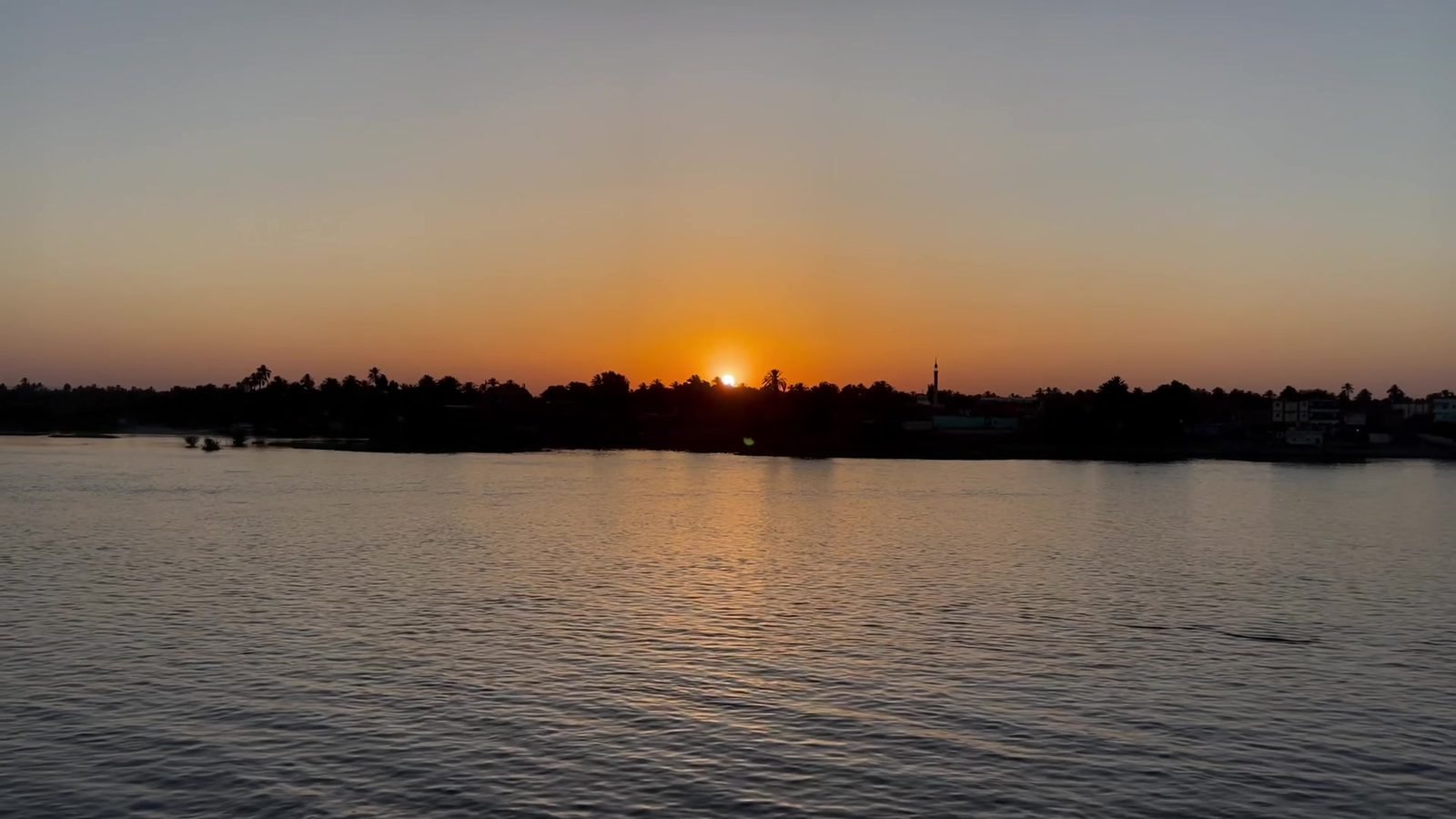
Five times a day you will hear the call to prayer from the minarets, including before dawn. On the river it drifts across the water from both banks, and many guests tell me it is one of the sounds they remember most. You do not need to do anything when you hear it.
Ramadan
Ramadan is the month of fasting. From dawn to sunset Muslims do not eat, drink or smoke, and at sunset the whole country stops to break the fast with the iftar meal. Ramadan 2027 is expected to begin on about 8 February and end on about 8 March, with the Eid al-Fitr holiday from about 9 March. The exact dates depend on the sighting of the moon and are confirmed only the night before.
Travelling in Ramadan is easy, and in some ways special. The sites stay open, although opening hours can be shorter, and we plan the visits around them. On the ship and in the hotels nothing changes for you: meals are served as usual. In the towns, eat, drink and smoke discreetly in daytime rather than in the street, out of respect for people who are fasting. The reward comes after sunset, when the streets fill with lanterns, families and food, and the evenings are the liveliest of the year. Expect things to slow down in the last hour before iftar, when everyone is heading home.
Ramadan 2027 falls in February, one of the best months for weather on the Nile. If you are choosing dates, the best time for a Nile cruise goes through the year month by month.
Before you travel
- Money and tipping in Egypt: pounds, cards, cash machines and baksheesh.
- Christmas in Egypt: two Christmases, what is open, and the holiday weeks on the Nile.
- Markets and hassle: how to buy well in the souk and how to say no.
Questions
What should women wear in Egypt?
At the temples and on the ship, comfortable light clothes. In the towns and souks, cover shoulders and knees, and carry a scarf for mosques.
Can tourists wear shorts in Egypt?
At the sites and on the ship, yes. In the towns, long trousers or a skirt below the knee are more respectful, and needed for mosques and churches.
Can non-Muslims visit mosques in Egypt?
Yes, outside prayer times. Cover shoulders and knees, take your shoes off, and women cover their hair.
Is it a good idea to visit Egypt during Ramadan?
Yes. The sites stay open, the ship and hotels run as usual, and the evenings after iftar are lively. Eat and drink discreetly in the streets in daytime.
When is Ramadan 2027?
It is expected from about 8 February to 8 March 2027, with Eid al-Fitr from about 9 March. The dates are confirmed by the sighting of the moon.
Do women have to cover their hair in Egypt?
No. Women cover their hair only inside a mosque. In the streets, at the temples and on the ship there is no need.
Can I fly a drone in Egypt?
Not without prior permission from the Ministry of Defence. Leave it at home.
Can I take photos of people?
Ask first. Some people will say no, and some will want a tip, especially at the sites.
