

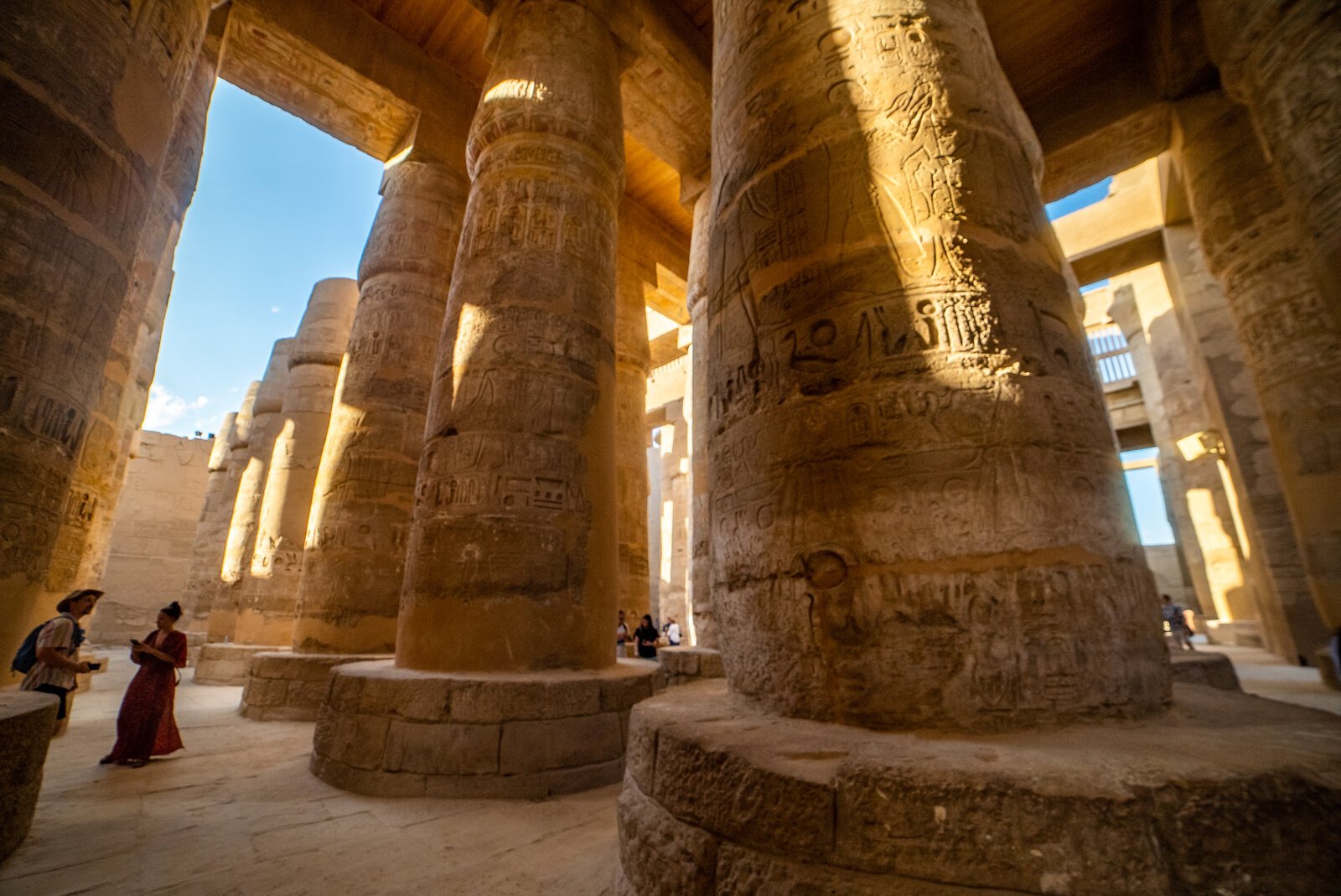
Half of my working day happens behind my guests’ cameras: holding phones, finding the angle at Abu Simbel, waving people into position at the pyramids. So this is a question I can answer from the ground: what you are allowed to photograph in Egypt, where a permit comes into it, and how to point a camera at people without causing offence.
- Phones and ordinary cameras are free at all the sites: the temples, the tombs, the pyramids, the river. The old photo tickets are gone.
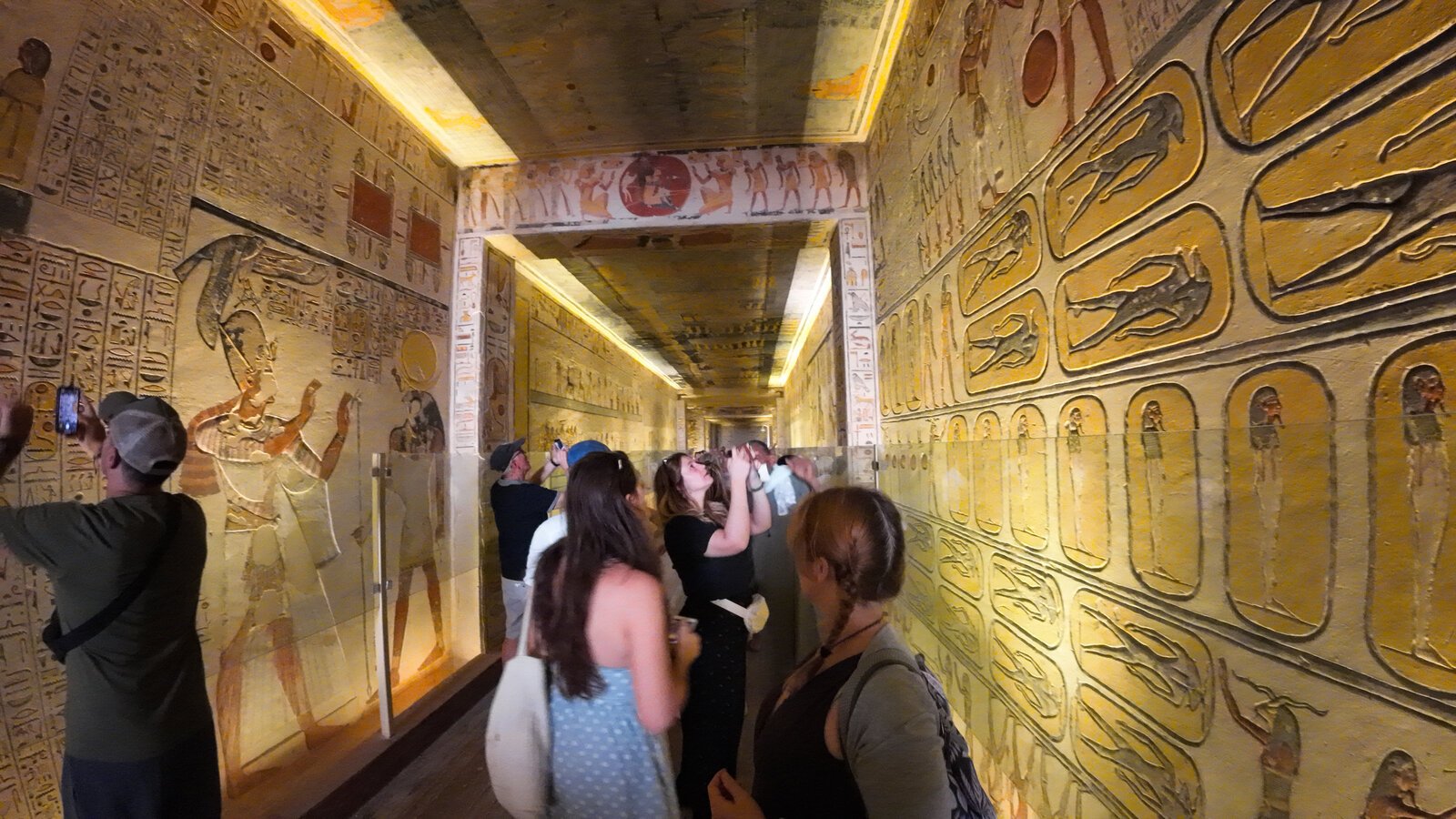
- Inside the tombs you can take photos and film video; the one firm rule is no flash, ever.
- Even professional cameras pass as a tourist. What needs a permit is a production: cases of equipment, or anything commercial.
- Drones are banned around the sites for visitors. Leave it at home.
- Photographing people: ask first, every time. Most Egyptians say yes with pleasure; the asking is what matters.
- Never photograph military sites, police or checkpoints. The High Dam at Aswan sits in a military zone, so the strict rules apply there.
Phones and cameras at the temples
At every site on the cruise route, Karnak, Luxor Temple, Edfu, Kom Ombo, Philae, Abu Simbel and the pyramids, you can photograph freely with a phone or an ordinary camera. No photo ticket, no permit, no extra charge. Egypt used to sell a separate camera ticket at some sites, and older guidebooks still mention it; that system is gone. The light does the work for you: the hour after opening and the last hour before sunset are when the stone turns gold and the crowds thin, which is exactly when the cruise itinerary puts you there.
Inside the tombs
This is where the rules surprise guests who read an old guidebook. The photo ticket that the Valley of the Kings used to require is gone too: today you can take photos and film video inside the tombs with your phone or camera, included in your entry. The one rule left is the one that matters most: no flash, ever. The paint on those walls has survived three thousand years, and strong light is its enemy. The guardians inside watch for flashes, and they are right to. Turn the flash off before you go down the first corridor, and shoot as much as you like.
Tripods, big lenses and the professional line
Egypt draws the line not at the camera but at the production. A phone, a mirrorless camera, even a professional camera with a serious lens, carried in the hand: tourist, welcome everywhere. Where the inspectors become strict is when the equipment multiplies, cases, rigs, lighting, a crew, or when the filming is plainly commercial, advertising and the like. That needs permission arranged in advance, and they do ask. A selfie stick passes without comment at the temples and in the tombs. The Grand Egyptian Museum in Cairo is the stricter exception: selfie sticks are not allowed there, and professional equipment needs permission.
Drones: leave it at home
Drones are banned for visitors in Egypt, and the ban is enforced most firmly around the archaeological sites, which is exactly where you would want to fly one. Customs can hold a drone at the airport; in our experience most pass through, but a drone that arrives still cannot fly at the sites. For a project that truly needs aerial filming, permission can be negotiated with the authorities in advance; tell us and we will see what is possible. For everyone else, the aerial shot of the Nile already exists: the hot air balloon over Luxor at sunrise, with your own eyes behind the camera.
Photographing people
This is where cameras cause offence or make friends, and the difference is one sentence: ask first. Hold up the camera, smile, say “surah?”, and read the answer. Most Egyptians say yes with real pleasure, and many will pose better than you hoped. A refusal is rare and final; lower the camera and smile anyway. Women in traditional dress, people at prayer and anyone working who has not looked up at you: do not ask, just enjoy the scene with your eyes. For children, the question goes to the parent, never the child.
At the sites and inside the tombs, the guardians in their galabeyas will offer to help with your photos, and they are good at it: they know every shaft of light and every photogenic corner of their monument, they will walk you to it, pose with you, and show you the pose. Be clear about what this is: helping with photos is a small extra income for them, and the custom in return is a small banknote. Sometimes they do it for the pleasure alone, but come with a few small bills in your pocket and the arrangement is honest on both sides.
From the ship, the balloon and the water
The river itself is the photograph most guests underestimate. From the sun deck there are no rules at all: the feluccas at Aswan, the fishermen, the buffalo in the shallows, the banks sliding past at golden hour. Keep the phone charged for the sailing afternoons, and the stretch around Esna and the approach to Aswan give the classic shots. The balloon over Luxor at sunrise is the one morning where you will want every battery you own. And if your trip continues to the Red Sea, underwater cameras and GoPros film freely there; guests of ours have filmed whole dives without a restriction in sight.

What not to photograph
Egypt is strict about a short list, and it is the same list as most countries: military sites and vehicles, police and checkpoints, airports and anyone in uniform who has not agreed to be photographed. The bridges over the Nile are not on the list; guests photograph them from the deck on every cruise. The place on our route where the military rules really apply is the High Dam at Aswan, which sits inside a military zone: a camera in your hand is normally no problem there, but big professional equipment and commercial filming need permits, and around the dam the officers mean it. If an official asks you to delete a picture, delete it with a smile and move on. It has never gone further than that with any guest of mine.
Before you travel
- What to pack: the power bank that keeps the camera alive.
- Wifi, SIM cards and your phone: getting the photos home from the river.
- The itinerary day by day: when the light is yours at each site.
- Markets, carriages and the hassle: the ground truth between ship and temple gate.
Questions
Can I take photos at the Egyptian temples?
Yes, freely, with a phone or any ordinary camera, at every site on the cruise route. There is no photo ticket and no extra charge.
Can I take photos in the Valley of the Kings?
Yes. The old photo ticket is gone: photos and video are allowed inside the tombs with your entry. The one rule is no flash, ever; the paint cannot take it.
Are tripods and professional cameras allowed?
A camera in your hand is fine, even a professional one. A production, with cases of equipment or commercial filming, needs permission arranged in advance, and the inspectors do check.
Can I bring a drone to Egypt?
Not as a visitor. Drones are banned around the sites and can be held at customs. For aerial photos, take the sunrise balloon over Luxor; for a professional project, ask us about permission.
Is it OK to photograph local people?
Ask first, every time, with a smile. Most people say yes with pleasure. For children, ask the parent. Never photograph police, soldiers or checkpoints.
Can I use a GoPro or underwater camera?
Yes. At the sites it counts as an ordinary camera, and in the Red Sea guests film underwater freely, with no restrictions.
When is the best light at the temples?
The first hour after opening and the last before sunset. The cruise itinerary already puts you at most sites in those windows; ask your guide where to stand.
