Open any Nile cruise itinerary and you meet the same big names: Luxor, Edfu, Kom Ombo, Aswan. But between Edfu and Kom Ombo the river keeps quieter places, and only the dahabiyas stop at them, because a boat with twenty guests can tie up where a ship with a hundred and twenty cannot. I guide at these places almost every week. This is what you actually see at El Kab, Gebel el Silsila, Daraw and the islands, and why I think they are the heart of a dahabiya cruise.
- El Kab is ancient Nekheb, city of the vulture goddess Nekhbet, with painted tombs of New Kingdom officials and soldiers.
- Gebel el Silsila is the sandstone quarry that built the great temples of the south. Its ancient name, Kheny, means the place of rowing.
- Daraw is a market town known for its camel market, held on its market days.
- The islands are where the boat moors for the night: village walks, tea in a family home, swimming stops in the clean stretches of the river.
- Cruise ships pass all of these. Dahabiyas stop.
Why only the dahabiyas stop here
A cruise ship needs a dock, and between Esna and Aswan the docks are at Edfu and Kom Ombo. A dahabiya needs a bank and a rope. That one difference decides everything: the dahabiya moors at islands and village landings, so the small sites along the way become part of the trip instead of scenery sliding past the window. The visits below are on the sailing routes of our dahabiyas, and the entrance fees on the route are part of the price.
El Kab, the city of the vulture goddess
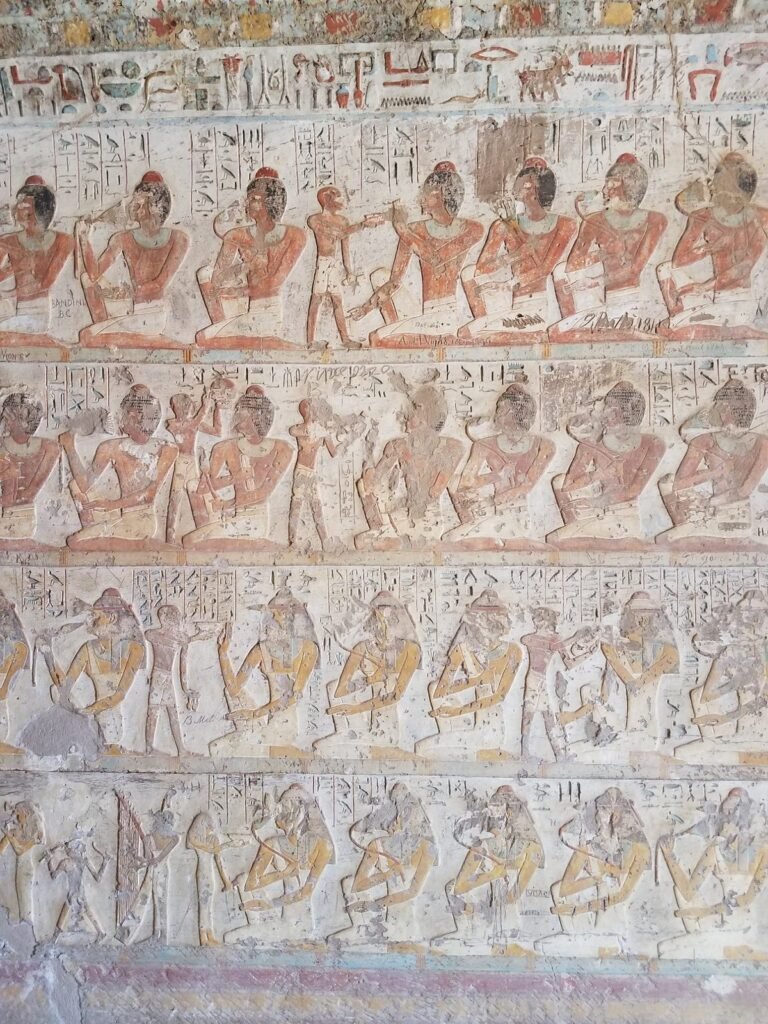
On the east bank, north of Edfu, stand the huge mudbrick walls of ancient Nekheb, one of the oldest towns of Egypt, with monuments running from the Predynastic period to Graeco-Roman times. This was the cult centre of Nekhbet, the vulture goddess who protected Upper Egypt; her white vulture flies over pharaohs in temple scenes all along the Nile, and this was her home.
The reason we climb the hillside is the tombs. Cut into the rock are the painted tombs of New Kingdom officials, among them Paheri, Ahmose Pennekhbet, and the soldier Ahmose son of Abana, who fought in the wars that drove the Hyksos out of Egypt and had his life story carved on the walls of his tomb. It reads like a soldier talking: the battles, the rewards, the gold of honour. For anyone who loves history, this small hillside is worth more than many famous halls.
Gebel el Silsila, where the temples were born
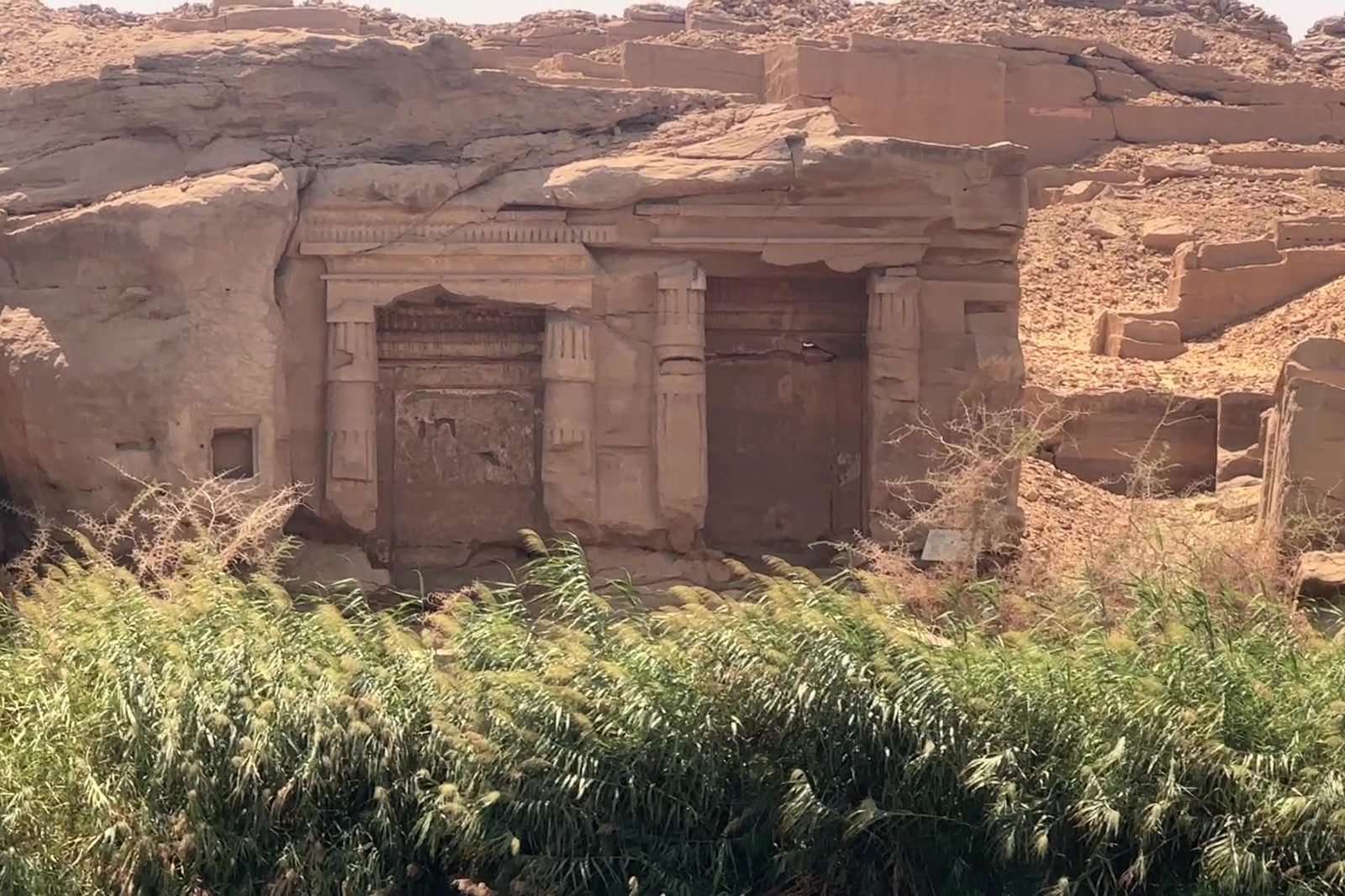
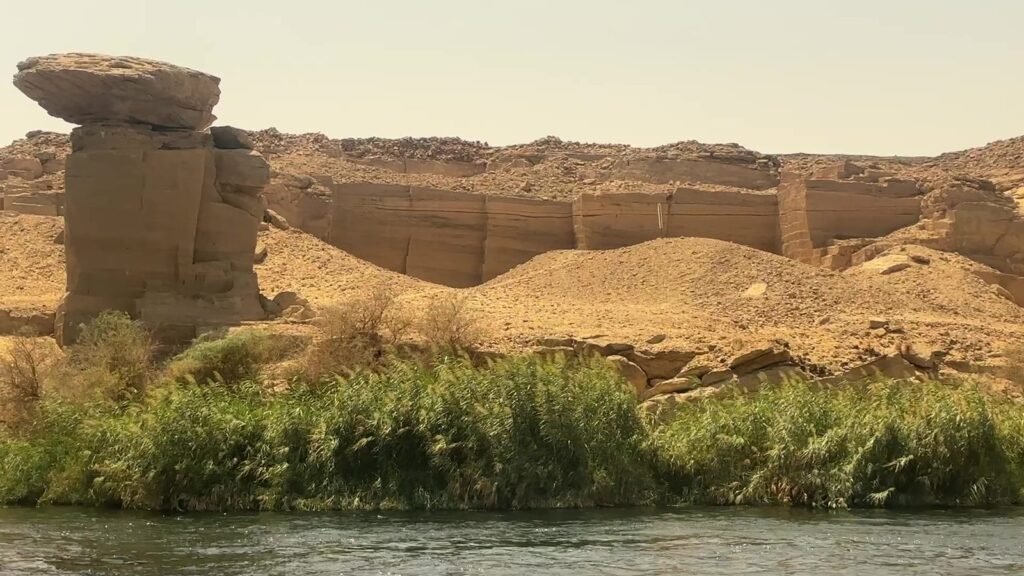
South of Edfu the desert closes in and the river runs between sandstone cliffs. The ancient name of this place was Kheny, the place of rowing. On both banks lie more than a hundred ancient quarries, worked from the Middle Kingdom right up to the twentieth century. The sandstone of the great temples of the south, Luxor among them, started here, and you can still put your finger in the chisel marks and read the workers’ inscriptions.
On the west bank is the Speos of Horemheb, a rock-cut temple with seven gods seated in its sanctuary, and along the cliff above the river a line of thirty two rock chapels cut for high officials, most of them from the time of Hatshepsut and Thutmose III. Sety I, Ramesses II and Merenptah added shrines of their own, and Ramesses III a great stela. The gods of the river are everywhere here: Sobek the crocodile, the local god, and Hapy, god of the inundation. A Swedish mission from Lund University has been documenting the site since 2012 and has recorded thousands of quarry marks and hundreds of texts, along with abandoned obelisks still lying where a crack stopped the work.
Daraw and the camel market
Daraw is not ancient, and that is the point. It is a working market town, and on its market days the camel and cattle market is one of the most honest things you can see in Egypt: traders, animals, tea, noise, no tickets and no souvenirs. Guests remember it as vividly as the temples, because nothing in it was arranged for them.
The islands and the river evenings
A dahabiya does not sail at night. In the late afternoon the boat finds its island: Bisaw, El Ramady, Maniha, each one a name you will not find in any guidebook. There is a walk through banana and mango gardens, tea in a village home, sometimes an evening party on the sand with local musicians, and in the warm months a swimming stop in a clean stretch of the river. These moorings are the real difference between the two kinds of cruise. On a ship the evening is a programme; on a dahabiya it is a place.
Which cruise sees them
Only the dahabiya routes. Each boat keeps its own sailing programme, so the exact stops vary with the boat and the wind, and the day by day lists on our dahabiya pages show where each one moors. If a particular site matters to you, tell us when you enquire and we will point you to the boat that stops there. If you are still choosing between the two kinds of boat, we compared them honestly in dahabiya or cruise ship.
Common questions
Which Nile cruises stop at El Kab and Gebel el Silsila?
Only dahabiyas. On our routes, both sites are stops on the 4-night Luxor to Aswan sailing of the Three Pyramids and Nour El Din dahabiyas, leaving Luxor on Mondays. The Princess Farida stops at Gebel el Silsila, and the Swan can stop at either on request.
Can a cruise ship visit El Kab or Gebel el Silsila?
No. The ships have no dock there, so they pass by. These sites are reached from the river landings, which is why they belong to the dahabiyas.
Are these visits included in the price?
Yes. On our dahabiya cruises the visits on the sailing route and their entrance fees are part of the price, with a licensed Egyptologist guide.
Is the camel market guaranteed?
The market runs on its market days, so it depends on which day your boat passes Daraw. We tell you honestly before you book whether your sailing catches it.
Are the walks difficult?
They are short walks from the landing. At El Kab the tombs sit up a hillside path, taken slowly with the group. Tell us when you enquire if anyone in your group walks with difficulty and we will plan around it.
