

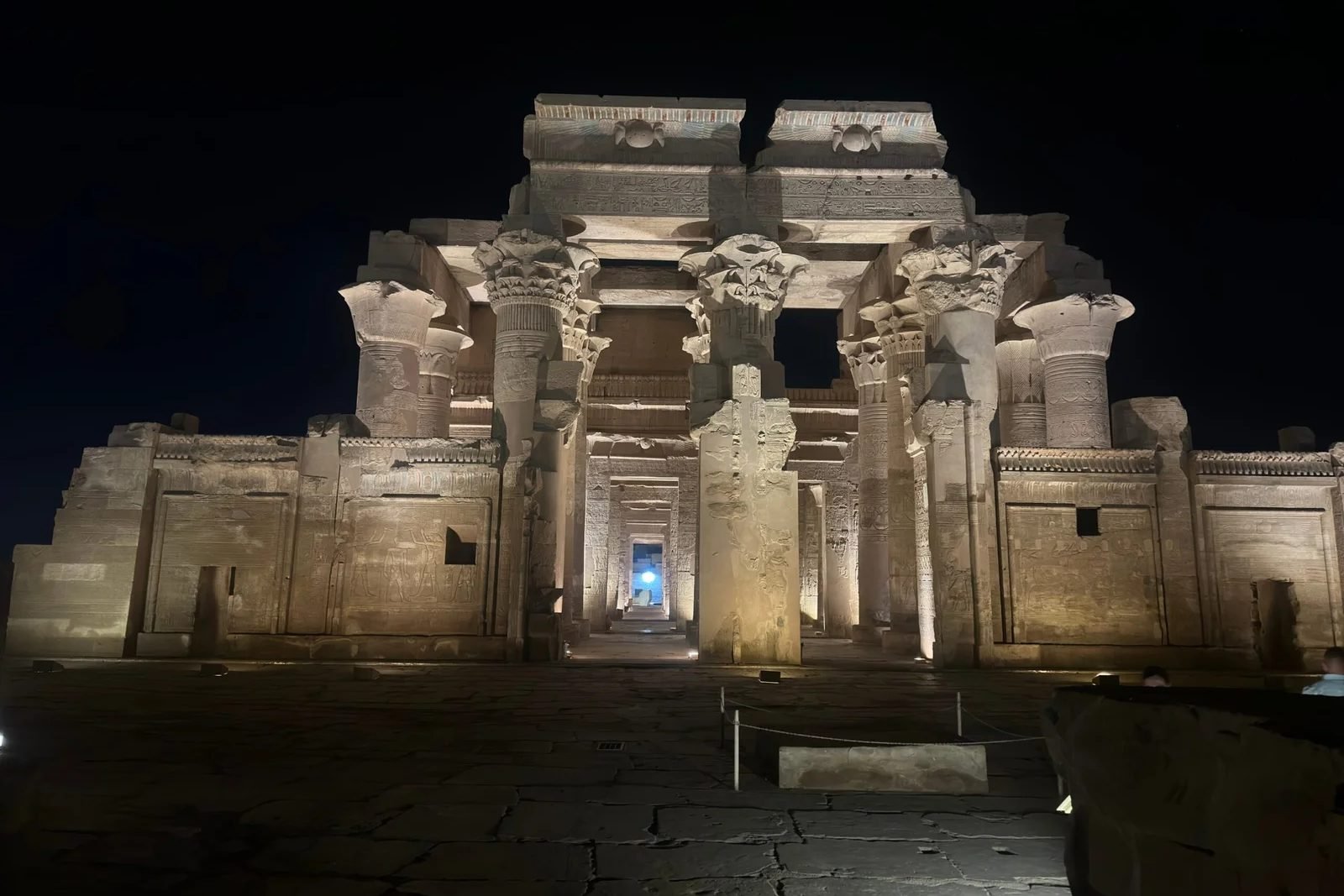
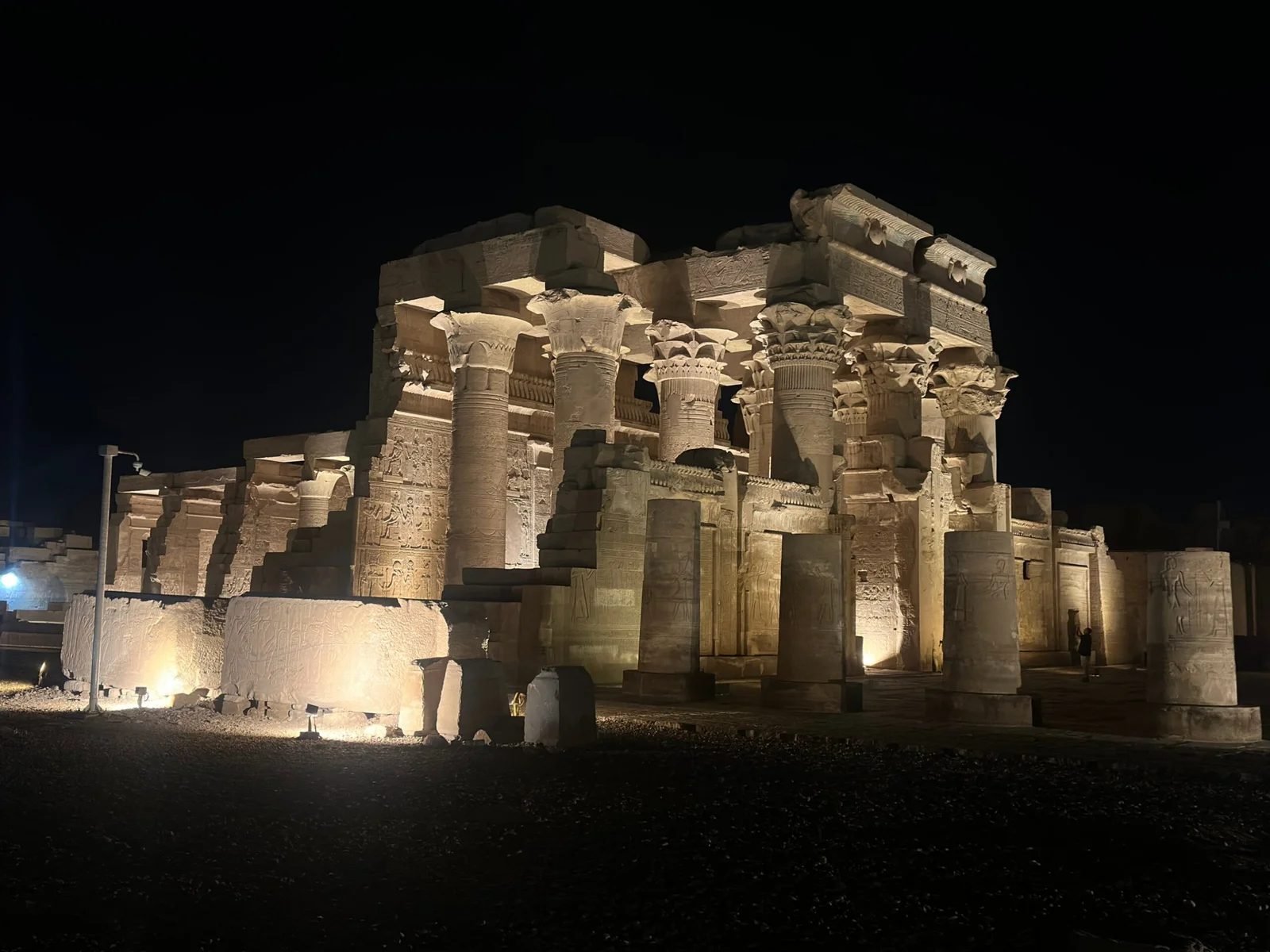
Every famous site in Egypt has an opening time, and a crowd that arrives with it. A private opening is the way around both. With official permission, arranged in advance, a site is unlocked outside the public hours just for your group, and you walk through Karnak sized gateways with nobody in front of you. We finished one at Kom Ombo this week; every photo in this article is from that night.
- A private opening means the antiquities authorities unlock a site just for your group, before the gates open in the morning or after they close at night.
- Most sites can be opened privately. The ones people ask for most are the Osireion at Abydos, Philae, and the Great Pyramid with the Sphinx.
- The Osireion is the special case: going down into it is only possible with a special opening.
- The tomb of Nefertari is the exception the other way: private openings there are not allowed at the moment.
- Each opening is arranged in advance and priced by site and group size, so ask us early with your dates.
What a private opening is
It is not a skip the line ticket and not a VIP lounge. It is the site itself, opened outside public hours under a special permission from the antiquities authorities, with the inspectors and guards present and the monument entirely yours for the visit. The two classic times are sunrise, before the day’s first buses, and night, after the last visitor has left. Everything is official and arranged in advance; you simply arrive at a closed gate and it opens for you.
What an empty temple feels like
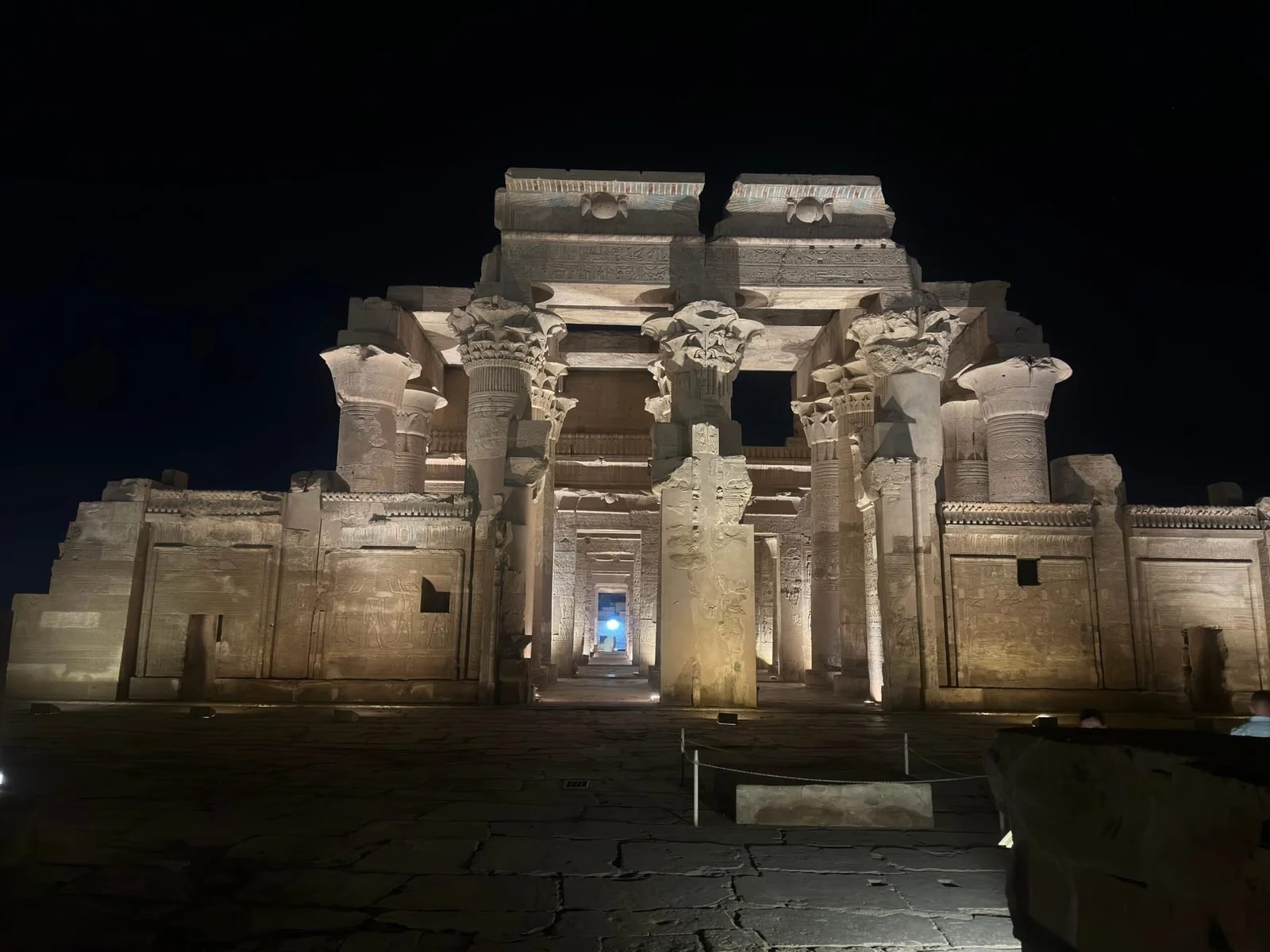
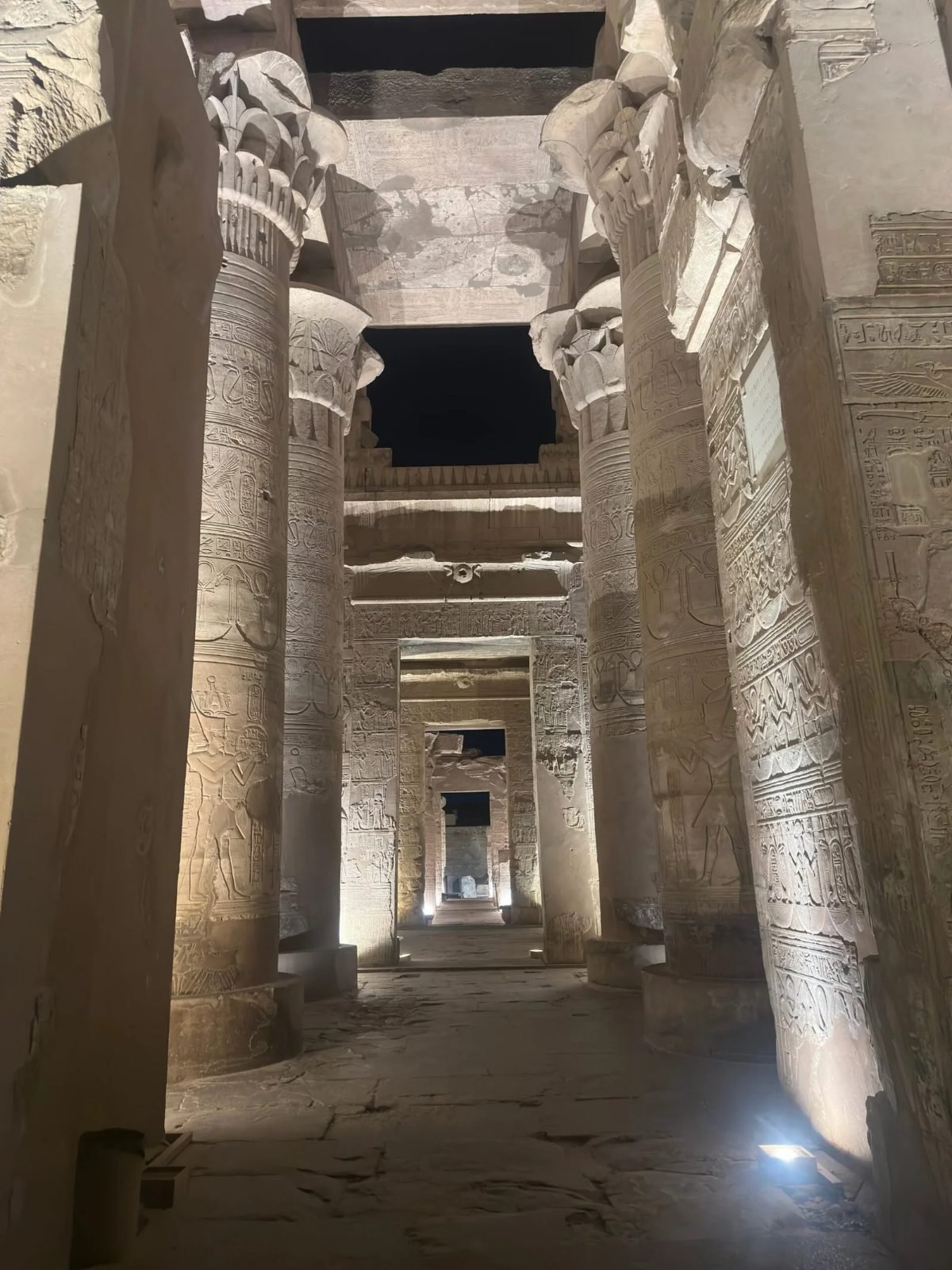
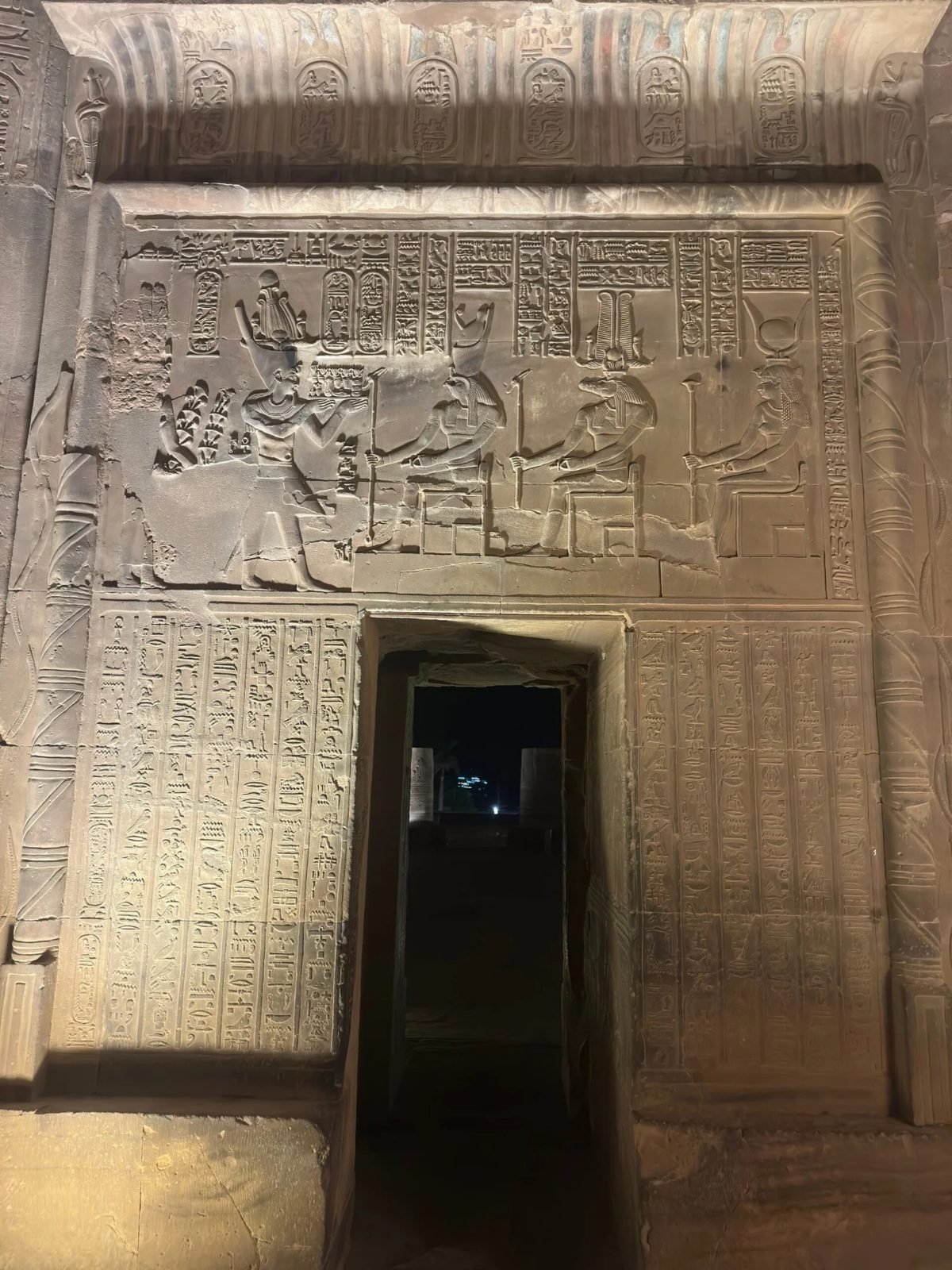
This week we stood inside Kom Ombo at night, alone. The same temple we visit on every cruise itinerary is a different place when the forecourt is silent: the lights rake across the reliefs, the columns throw shadows the daytime sun never makes, and you hear the river instead of two hundred voices. Being on a site by yourself is a completely different experience from sharing it, and that is the whole product.
The sites people ask us to open
The Osireion at Abydos. An underground hall of massive granite, where the ancient Egyptians placed the tomb of Osiris himself. It is not part of the normal Abydos visit: going down into it takes a special opening, which is why it draws the most requests we see, many from people who come to meditate or simply to stand in it in silence.
The Great Pyramid and the Sphinx. The pyramid can be opened privately outside the public hours, and the Sphinx enclosure, which day visitors see only from the viewing areas, can be opened so you stand at its paws.
Philae. The temple of Isis on its island, reached by boat. At night, with the island to yourselves, it is hard to believe it is the same place the morning crowds queue for. Imagine Philae empty; that image is close to the real thing.
The tomb of Seti I. The longest and finest tomb in the Valley of the Kings, on its own ticket even in normal hours, and open to private visits for those who want it without another soul inside.
Hatshepsut’s temple and Medinet Habu. The great terraces at Deir el Bahari at sunrise, or the memorial temple of Ramses III with its colours and its battle reliefs, each can be opened for a private visit on the west bank.
Nearly everything else can be asked for. The one current exception is the tomb of Nefertari, where private openings are not allowed at the moment.
How to arrange one
Tell us the site and your dates first, because a private opening is a permission, not a ticket, and it is arranged in advance through the antiquities authorities. The cost depends on the site and the size of your group, so it is always quoted for your request. Most guests add an opening to a Nile cruise or build a tailor-made trip around one, Abydos and the Osireion included.
Questions people ask
Is a private opening official?
Yes. It happens under a permission issued by the antiquities authorities, with the site’s own inspectors and guards present. Nothing about it is a back door.
When does it happen?
Outside public hours: usually at sunrise before the site opens, or at night after it closes. Sunrise suits photographers; night visits, like our Kom Ombo opening in the photos, have the drama of the floodlights.
How much does it cost?
It depends on the site and the group size, so we quote each request. It costs more than a normal ticket and it is worth planning early.
Can it be part of a Nile cruise?
Yes. The cruise programme keeps its rhythm, and the opening is added before, after, or during your days in Luxor and Aswan. For Abydos and the Osireion we plan a day from Luxor.
Send us the site you are dreaming about and your dates on WhatsApp, and we will tell you honestly what can be opened and what it takes.
