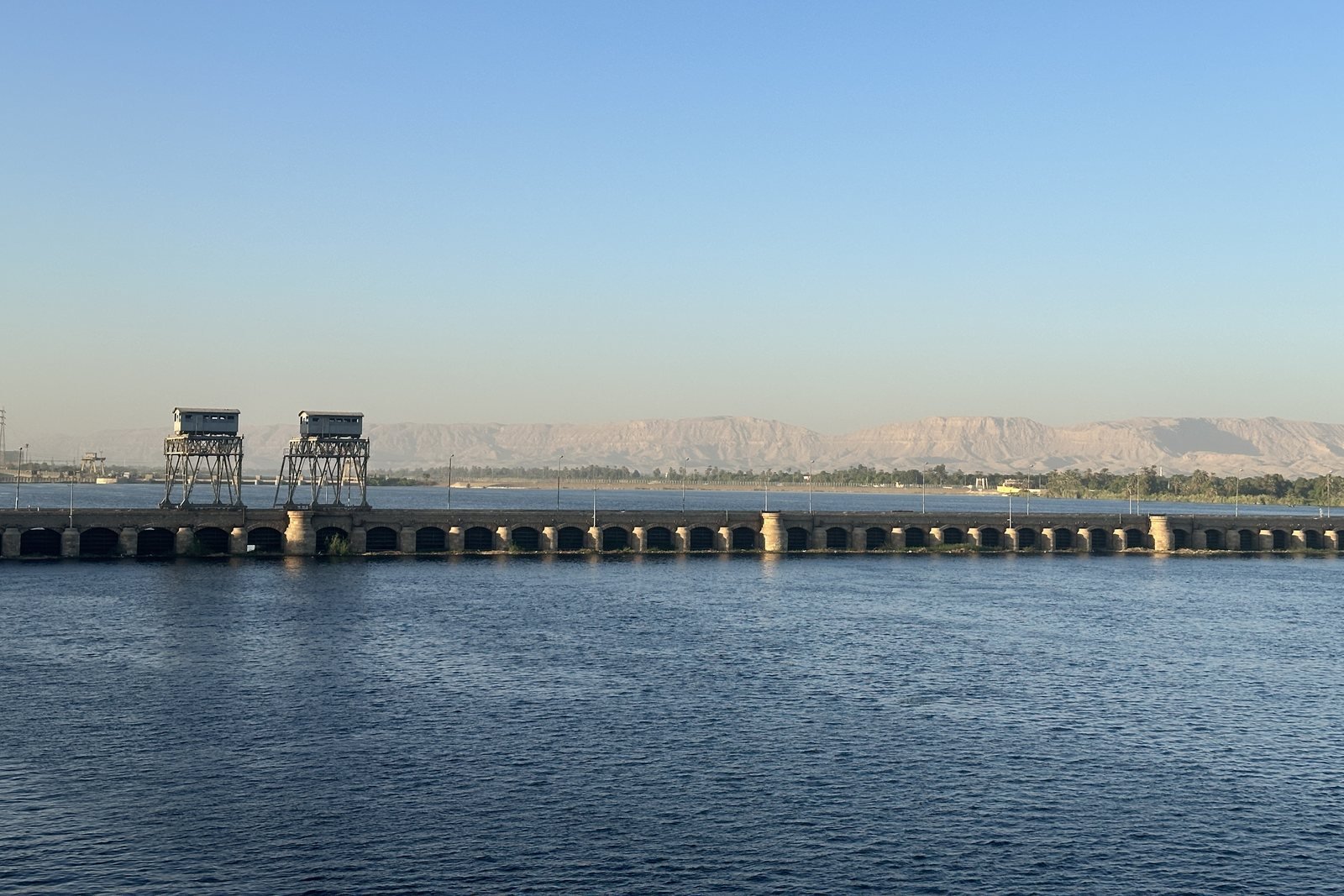
The Esna lock is the one place on a Nile cruise between Luxor and Aswan where the ship has to pass through a lock. It sits in the New Esna Barrage, about 55 kilometres south of Luxor, and every cruise ship on this stretch goes through it. There are two locks side by side. Each year, before the winter season, one of them is closed for maintenance and every ship in both directions has to share the other, which is why ships have been queuing at Esna for hours. Here is what the lock does, why it matters to Egypt far beyond tourism, and what the wait means for your cruise.
- The Esna barrage holds the Nile back to feed irrigation canals and a power station. The lock is how ships get past it.
- There are two navigation locks. The second was added in 2008 so that ships could keep moving while the first is maintained.
- One lock is closed each year for its maintenance before the winter season. With one lock working, every ship queues for it, and waits of several hours are normal.
- Four night cruises pass the lock sailing south after the Luxor West Bank day. Three night cruises pass it sailing north between Edfu and Luxor, usually at night.
- The sites on your programme do not change. What can change is the time the ship arrives at the next stop.
What the Esna barrage does
A barrage is a low dam built across a river to raise the water level behind it. It does not store water the way the Aswan High Dam does. Its job is to lift the Nile high enough upstream to push water into the irrigation canals that take off from the river there, and to control how much flows on downstream.
Almost all of Egypt’s farmland depends on the Nile, and a chain of barrages between Aswan and the Delta is what spreads that water onto the fields on both banks. Esna is one of them. The New Esna Barrage is run by Egypt’s Ministry of Water Resources and Irrigation and is made up of a spillway channel with 11 gates, a rockfill dam 520 metres long, a hydroelectric power station, and two first class navigation locks. The road across the top is also the bridge that joins the east and west sides of Esna town.
It replaced an older barrage built by British engineers in the early 1900s, in the reign of Khedive Abbas Hilmi II. The old stone barrage still stands.
Why a barrage needs a lock
Because the barrage holds the river back, the water on the upstream side is several metres higher than on the downstream side. A ship cannot sail over that step, so it goes through a lock: a chamber with gates at both ends that works like a lift for boats.
A ship sailing south towards Aswan enters the chamber at the lower level and the gates close behind it. Side sluices let water in from the upstream side until the chamber is level with the river ahead. The front gates open and the ship sails on. Going north, the same happens in reverse: the chamber is emptied until the ship is down at the level of the river towards Luxor. The second lock has four main gates for the ships and four side sluices that fill and empty the chamber.
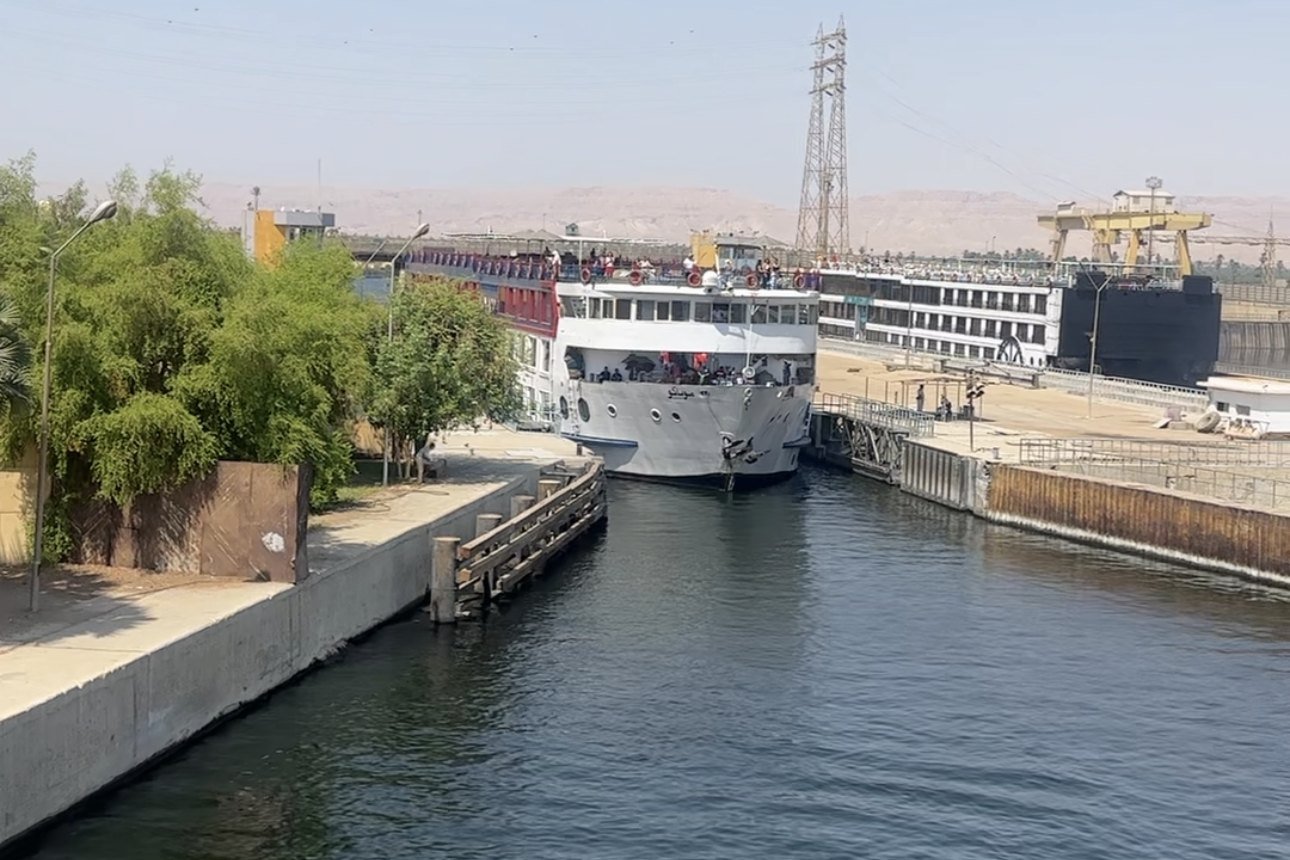
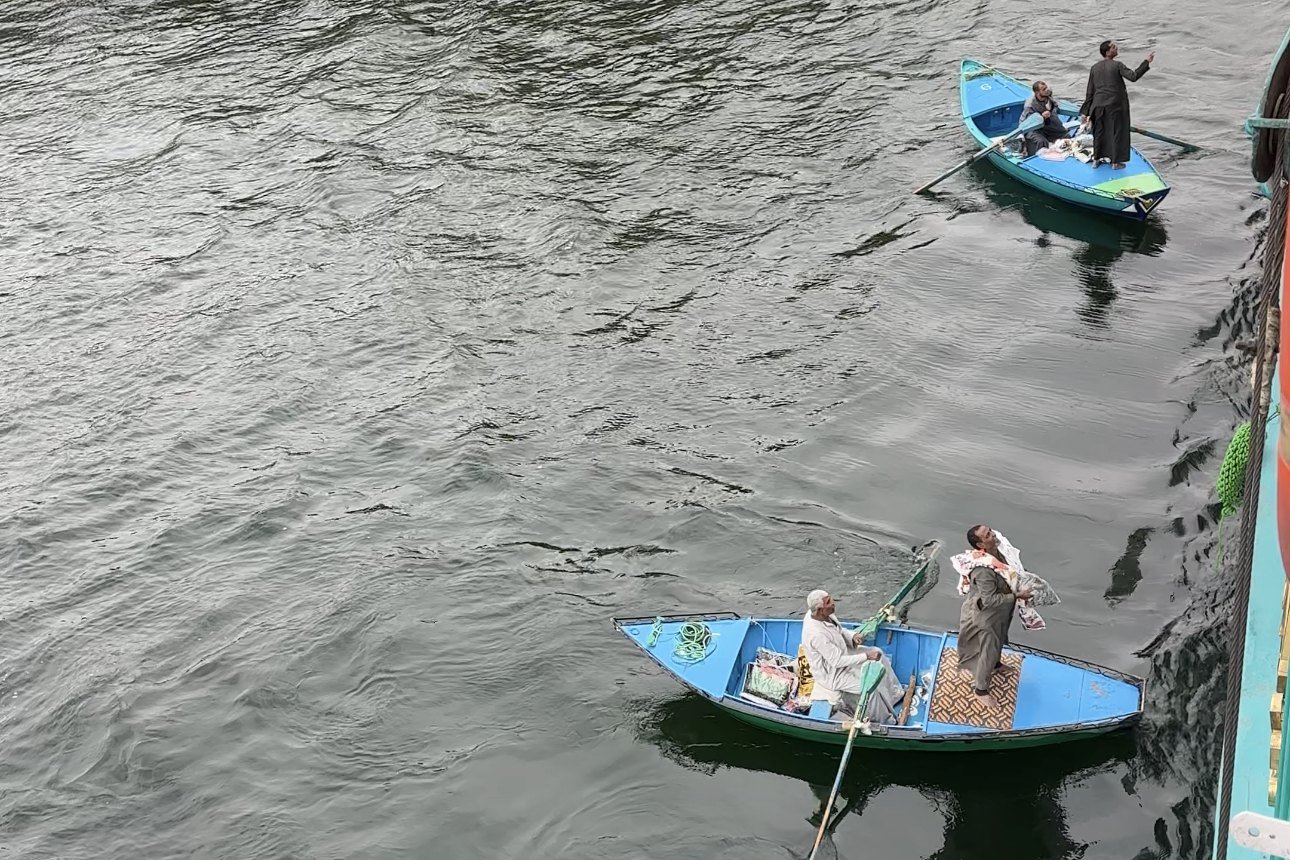
Most guests watch it from the sundeck, and your guide is up there with you, explaining each stage of the crossing as it happens. The walls of the chamber rise past you, or you rise past them, close enough to touch. While the ships wait, small rowing boats come alongside and sellers throw folded galabeyas and tablecloths up onto the deck, then bargain by shouting across the water. If you like the price you throw the money down in the bag. If you do not, you throw the cloth back. Your guide will tell you who the sellers are and how it works before you start.
Why there are two locks
For years there was only one lock at the new barrage. When it was closed for maintenance, ships could not pass Esna at all, and cruises had to be cut at Esna with guests taken by road to the sites on the other side.
The second lock was built in 2008 for two reasons, according to the Ministry: to shorten the time tourist boats take to cross between Luxor and Aswan, and to make sure river traffic and tourism do not stop while the locks are being maintained. With both locks open, ships go through in both directions at once and the crossing is usually quick.
Why ships are waiting at Esna now
Each year, before the winter season starts, one of the two locks is closed for its maintenance: gates, sluices and machinery checked and repaired so that both are fully working when the river is at its busiest. While that is happening, every ship in both directions has to use the one remaining lock, taking turns.
Each passage takes time, because the chamber has to be filled or emptied before the next ship can go in. Cruise ships also run to fixed weekly timetables, so many of them reach Esna within the same few hours on the same days. Put those together and a queue forms. Waits of several hours in front of the lock are normal during the maintenance period, and at the busiest times they can be longer.
It is not a breakdown, and it is not something a cruise company can avoid by choosing a different ship. Every ship on the river between Luxor and Aswan uses the same lock.
Separately, the Ministry is also modernising the control systems of the barrage’s spillway gates, work it has said is due to be finished in October 2026. That work is on the gates that control the river’s flow, not on the locks themselves.
What it means for your cruise
Where the wait falls depends on which way you are sailing. On the four night cruise from Luxor, the ship sails south through the lock on the afternoon of day 2, after the West Bank, on its way to Edfu. On the three night cruise from Aswan, the ship passes it sailing north between Edfu and Luxor, usually during the night. The full day by day is in our Nile cruise itinerary.
The temples on your programme do not change. The wait happens on the water, with you on board, fed and comfortable, and much of it at times when the ship would have been sailing anyway. What it can change is the time the ship reaches the next mooring, so a visit may start later than it would have, or the day may be arranged a little differently to fit around the lock. During the wait your guide stays with you on the sundeck, tells you what is happening at the lock and how the rest of the day is shaping up.
If your flight home leaves on the morning of the last day, tell us when you book. The lock is not on the last night of either cruise, but it is worth us knowing so we can plan the transfer with some room in it.
Why it is worth it
A few hours at Esna is a small price for what the barrage does. The water it lifts into the canals reaches farms along this part of the valley, and its power station feeds the grid. Keeping the locks maintained is also what keeps them reliable for the rest of the year, and is the reason there are two of them in the first place.
If you would like to know how the lock is running on your dates, send us a message on WhatsApp or through our contact page. And if you are still choosing a direction, we have compared Luxor to Aswan and Aswan to Luxor, and set out how to book a Nile cruise without paying more than you need to.
